


Imagine stepping into a world where your wildest ideas come to life, where reality bends to your whims, and where you can finally escape that never-ending Zoom call. Welcome to the fascinating realm of virtual reality mapping, where creativity meets cutting-edge technology. This innovative approach transforms ordinary spaces into immersive experiences, making it easier than ever to visualize concepts, plan projects, or simply have a little fun.
Whether it’s for architecture, gaming, or education, virtual reality mapping is revolutionizing how people interact with their environments. It’s like having a magic wand that turns flat blueprints into vibrant 3D landscapes. So buckle up and get ready to dive into a world where the only limit is your imagination, and the possibilities are as endless as your favorite Netflix binge.
Overview of Virtual Reality Mapping
Virtual reality mapping merges digital data with physical environments. This technology allows users to immerse themselves in interactive 3D models, offering a unique perspective on real-world locations. Users experience transformed spaces where imagination and technology intersect.
Architecture professionals utilize virtual reality mapping to present designs and ideas visually. By visualizing concepts in 3D, architects enhance communication with clients, helping them grasp complex ideas. Gaming developers incorporate this technology to craft realistic virtual worlds, engaging players in novel ways.
Educational institutions exploit virtual reality mapping for immersive learning experiences. Students explore historical sites and complex scientific concepts as if they were there. Such engagement solidifies understanding and retention of information.
Various industries benefit from this innovative approach. Retail businesses enhance customer experiences by allowing users to virtually walk through stores and interact with products. Real estate agents showcase properties through virtual tours, facilitating remote viewings and increasing sales potential.
Data visualization also sees advancements through virtual reality mapping. Professionals analyze data sets and geographic information systems in a visually compelling way. Enhanced visualization encourages better decision-making and insights.
As this technology continues to develop, it influences various fields, encouraging creativity and redefining boundaries. The evolution of virtual reality mapping paves the way for endless possibilities, transforming how concepts come to life.
Key Technologies Behind Virtual Reality Mapping
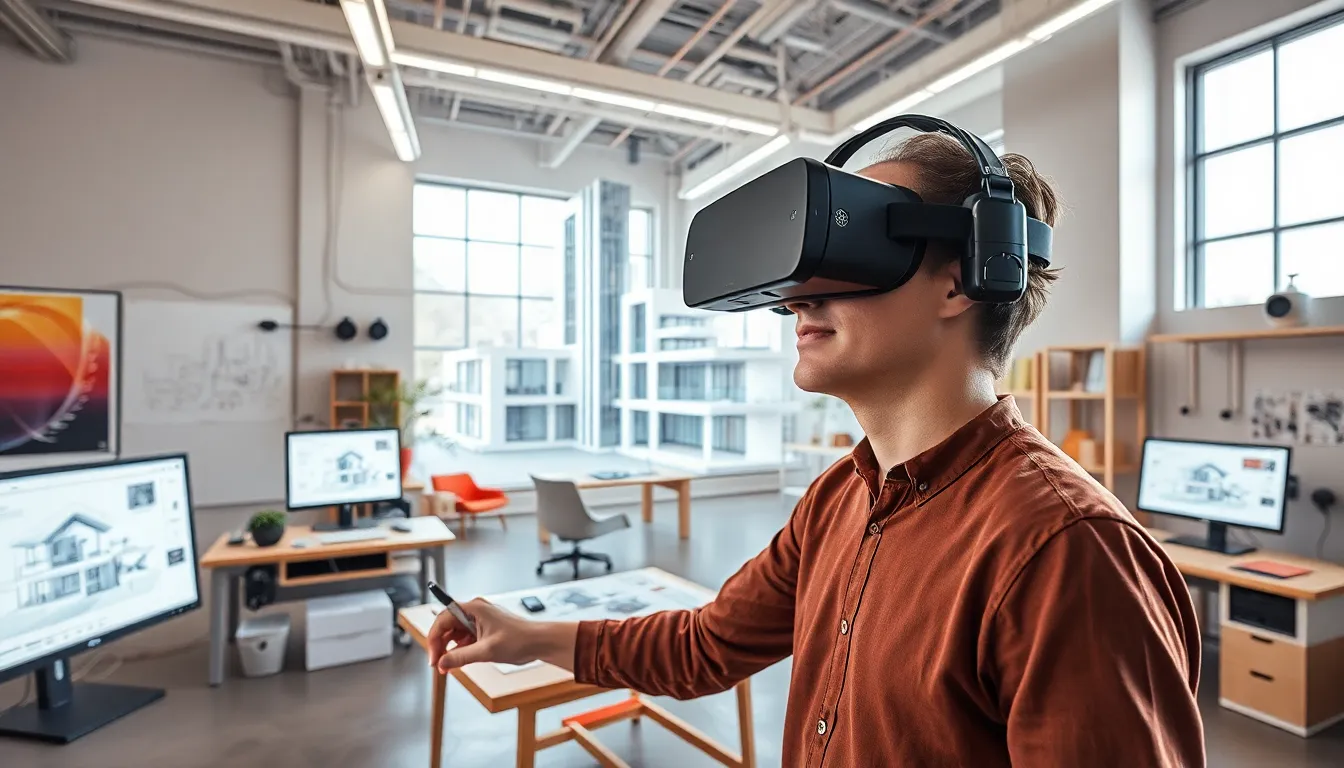
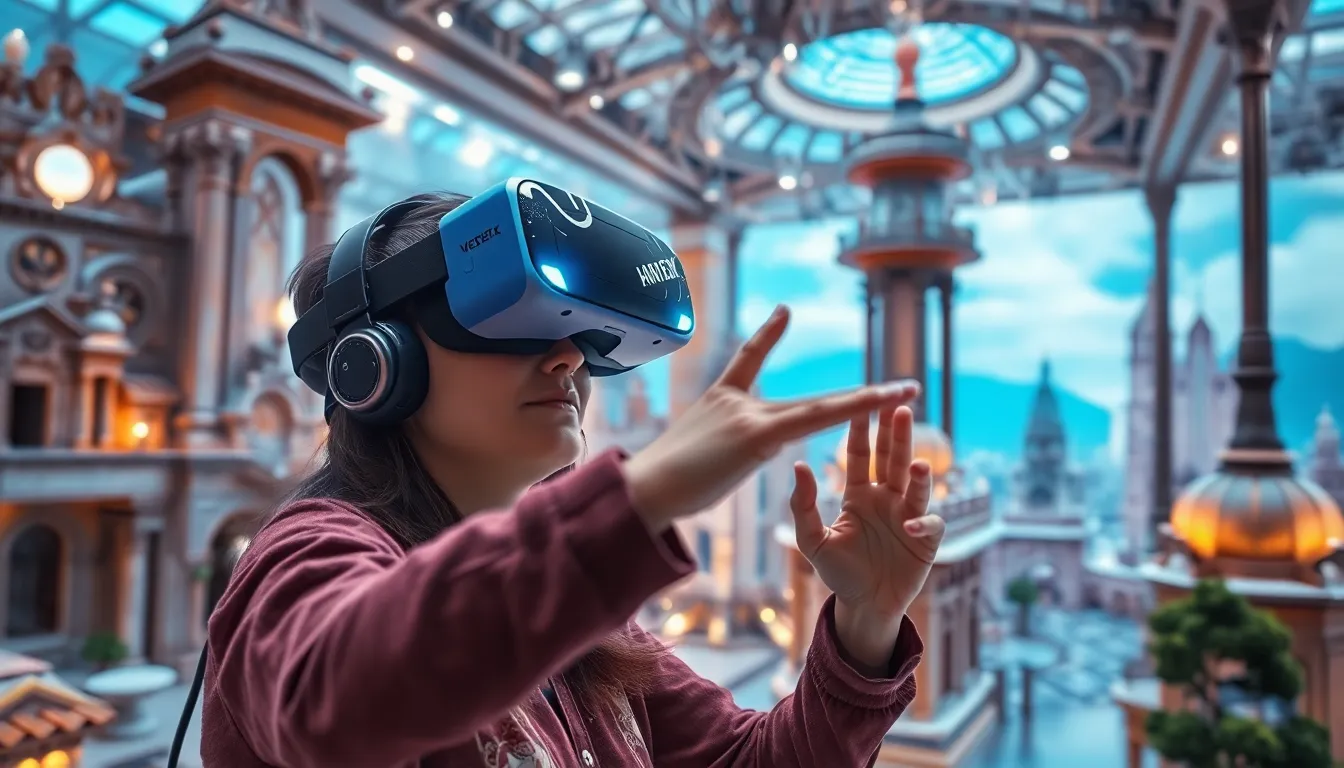
Virtual reality mapping relies on several key technologies that enhance immersive experiences, making them engaging and practical across various industries.
3D Modeling and Simulation
3D modeling creates lifelike representations of objects and environments. Tools like AutoCAD and Blender allow designers to build intricate models that accurately depict spatial relationships. Artists and architects utilize these models to visualize projects before construction. Simulation software then enables users to interact with these models, providing dynamic feedback on design choices. Accurate simulations help users understand how light, materials, and structures interact within a space. This technology ultimately streamlines the design process and enhances communication among stakeholders.
Interactive Environments
Interactive environments offer users the ability to engage with virtual spaces seamlessly. Virtual reality headsets, such as Oculus Rift and HTC Vive, transport users into these immersive realms. These environments respond to user actions, enabling real-time exploration and manipulation of elements. This interactivity fosters deeper engagement, especially in educational contexts, where students can explore science concepts or historical events firsthand. Furthermore, in the retail industry, businesses create virtual stores that allow customers to navigate products in a 3D space, enhancing the shopping experience. By blending technology and user interaction, these environments redefine how individuals perceive and engage with information.
Applications of Virtual Reality Mapping
Virtual reality mapping finds diverse applications across multiple fields, showcasing its transformative potential. Two significant areas are education and urban planning.
Education and Training
Educational institutions utilize virtual reality mapping to create immersive learning experiences. Students can explore historical events, travel through space, or engage with intricate scientific phenomena through interactive 3D environments. It enhances engagement and boosts comprehension. Additionally, vocational training programs use VR mapping to simulate real-world scenarios, allowing trainees to develop practical skills in a controlled environment. Realistic simulations of machinery operations and emergency response situations provide learners with hands-on practice without real-world risks.
Urban Planning and Development
Urban planners employ virtual reality mapping to visualize complex projects before actual construction. By representing urban spaces in three dimensions, stakeholders can assess design impacts on communities. Collaborative planning becomes more effective as city officials, architects, and residents can navigate virtual models together. Enhanced feedback loops promote a deeper understanding of proposed developments and foster public engagement. Environmental impacts also receive attention, allowing planners to incorporate sustainability into designs effectively. Overall, virtual reality mapping revolutionizes how urban spaces are conceptualized, planned, and executed.
Challenges and Limitations
Virtual reality mapping faces several challenges and limitations that impact its effectiveness and accessibility.
Technical Constraints
Technical constraints often hinder the full potential of virtual reality mapping. Hardware limitations such as low processing power restrict the level of detail in 3D models. Limited battery life in VR devices can disrupt user experiences, especially during extended sessions. Network issues can also affect the seamlessness of interactive mapping, causing lag in response times. Furthermore, software compatibility poses challenges, as various platforms may not support specific VR tools, leading to barriers in collaboration.
User Experience Issues
User experience issues significantly impact how individuals engage with virtual reality mapping. Motion sickness can arise during interactions, particularly if the experience lacks proper calibration. Accessibility remains a concern, as not all users can easily navigate complex interfaces or wear bulky headsets. Learning curves for new users can discourage widespread adoption. Additionally, users may encounter difficulties when transitioning between virtual and physical environments, leading to disorientation or confusion.
Future Trends in Virtual Reality Mapping
Advancements in artificial intelligence are shaping the future of virtual reality mapping, enabling more intuitive user interactions. Data mining techniques enhance the integration of virtual elements with real-world environments, creating more personalized experiences. Increased computational power allows for higher-resolution graphics, leading to more detailed and immersive visuals.
Moreover, 5G connectivity offers the potential for real-time VR experiences, allowing multiple users to engage in the same virtual environment simultaneously. This technology could transform collaborative workspaces, facilitating teamwork across geographical boundaries. Virtual reality mapping in retail will likely offer tailored shopping experiences, where customers can visualize products in their own spaces before making purchases.
Sustainability will emerge as a focus within architecture and urban planning. Enhanced simulations can help visualize eco-friendly designs, enabling more informed decision-making regarding materials and resource usage. This trend aligns with increasing public interest in sustainable living.
Biosensors could also enhance interactivity in VR mapping. By measuring physical responses, these sensors adjust experiences based on user emotions, further immersing individuals in virtual environments. Health applications may offer therapeutic simulations for stress relief or rehabilitation.
In education, adaptive learning environments will become more common. These environments may dynamically change based on individual learners’ needs, ultimately promoting better engagement and retention. In vocational training, VR mapping will emphasize realistic scenarios that mirror job-related tasks, ensuring learners have practical experience.
Lastly, regulatory developments will guide the ethical use of virtual reality mapping. As privacy concerns grow, frameworks will define the boundaries of data usage in VR environments. Future developments in virtual reality mapping offer exciting possibilities, significantly impacting various industries and everyday experiences.
Virtual reality mapping stands at the forefront of technological innovation. Its ability to create immersive experiences is reshaping how individuals interact with their environments. As industries continue to embrace this transformative tool, the potential for enhanced communication and understanding grows.
The future promises even greater advancements as artificial intelligence and improved connectivity pave the way for richer interactions. With a focus on sustainability and ethical considerations, virtual reality mapping is set to redefine not just professional landscapes but everyday life. Embracing this technology will undoubtedly lead to new horizons of creativity and collaboration.

