


In the fast-paced world of game development, staying updated is as crucial as knowing the difference between a joystick and a game controller. With studios popping up like mushrooms after a rainstorm, there’s always something exciting brewing in the industry. Whether it’s a groundbreaking indie title or a blockbuster sequel that promises to blow players’ minds, game dev studio news has never been more thrilling.
Recent Developments in Game Dev Studios
The game development landscape is shifting rapidly, with exciting news emerging from various studios. Recent activities highlight significant changes and upcoming titles that fans eagerly anticipate.
Major Studio Acquisitions
Major studios are consolidating through strategic acquisitions. For instance, Microsoft’s acquisition of Activision Blizzard marks a significant move, valued at $68.7 billion. Meanwhile, Sony’s acquisition of Bungie, with a $3.6 billion deal, focuses on expanding its portfolio. Embracing talents and franchises from these acquisitions strengthens their market presence. In another development, Embracer Group announced plans to acquire Limited Run Games, enhancing its catalog with niche titles. These acquisitions signal industry growth and a focus on expanding player experiences.
Upcoming Game Releases
The roster of upcoming game releases features several high-profile titles. For example, Starfield by Bethesda plans its highly anticipated launch later this year, aimed at bringing a new space exploration experience. Additionally, the sequel to The Legend of Zelda: Breath of the Wild is generating excitement, scheduled for release in the first half of 2024. Developers continue to reveal details about new indie games as well, such as Hollow Knight: Silksong expected to deliver engaging gameplay and memorable art. These forthcoming titles promise innovative gameplay and rich storytelling, appealing to both casual and hardcore gamers.
Noteworthy Innovations in Game Development
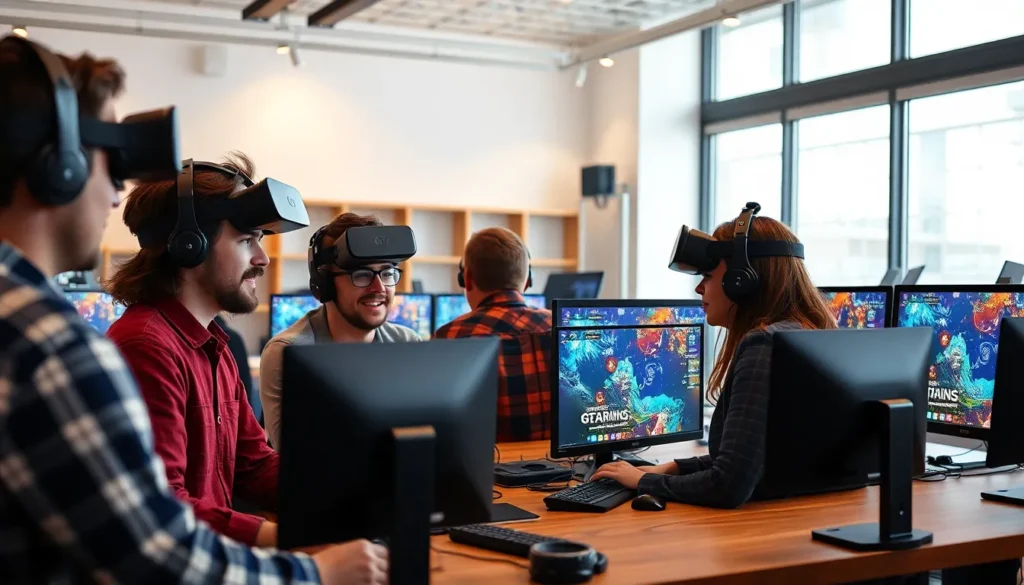
Significant innovations continue to shape the landscape of game development. These advancements not only elevate gameplay but also enhance player engagement.
Emerging Technologies
Artificial intelligence now plays a crucial role in creating immersive experiences. Developers utilize machine learning algorithms to generate dynamic in-game environments. Virtual reality and augmented reality technologies transform how players interact with digital worlds. Cloud gaming provides access to high-quality titles without the need for specialized hardware. Blockchain technology introduced new ways for players to own and trade in-game assets securely. Each of these technologies pushes the boundaries of creativity and interactivity in gaming.
Game Design Trends
Story-driven gameplay elements gain popularity among developers, emphasizing character development and narrative depth. Procedural generation enhances replayability through unique environments and quests. Inclusion of diverse representation in characters and stories enriches the gaming experience for broader audiences. Additionally, players now seek meaningful choices that influence story outcomes. Indie studios frequently experiment with innovative mechanics and unconventional art styles, driving the industry forward. Each trend signifies a shift toward creating more engaging and relatable game experiences.
Industry Challenges and Responses
The game development industry faces significant challenges as it navigates a shifting landscape. Studio closures and layoffs pose threats to innovation and workforce stability.
Studio Closures and Layoffs
Recent reports indicate a rise in studio closures due to financial pressures and marketplace competition. Notably, several mid-sized studios have ceased operations, impacting hundreds of developers. Layoffs often stem from acquisitions that lead to redundancies, as seen in both Microsoft’s and Sony’s recent transactions. These industry shifts can dampen creativity and limit the diversity of game titles entering the market. Employees affected by layoffs frequently struggle to find new opportunities within the tight labor market, raising alarms over talent retention. Game developers express concerns about job security, further complicating recruitment in a competitive environment.
Strategies for Sustainability
To address sustainability, studios are adopting innovative business models and forming strategic partnerships. Many now embrace remote work, which can expand talent pools and reduce operational costs. Additionally, some studios experiment with episodic content or free-to-play models to ease financial burdens. Benchmarking against successful peers helps studios recognize high-performing metrics for profitability. These approaches strive to maintain creativity and workforce engagement while navigating industry challenges. Focus on community-driven feedback allows teams to adapt products dynamically, enhancing player investment and loyalty. Through these strategies, studios aim to create resilient business practices that thrive amid market pressures.
Community Engagement and Feedback
Community engagement plays a crucial role in the game development industry, influencing decisions and enhancing player experiences. Developers increasingly rely on player feedback to shape game mechanics, storytelling, and overall design.
Importance of Player Input
Player input remains vital in shaping successful games. Developers gain insights that lead to improved gameplay and user satisfaction when they actively listen to their audiences. Feedback mechanisms such as surveys, beta testing, and forums foster collaboration between studios and players. Engaging with players cultivates loyalty, making them feel valued within the gaming community. Players are likely to invest more time and money in games that reflect their preferences, ensuring ongoing support for studios.
Case Studies of Successful Engagement
Several studios exemplify successful community engagement strategies. For instance, Devolver Digital utilizes social media platforms to interact with players, often sharing development updates and actively responding to comments. This approach generates excitement and builds a strong community around their titles. Another example includes CD Projekt Red, which implemented player feedback to enhance Cyberpunk 2077 post-launch, demonstrating a commitment to continuous improvement. Such strategies show how meaningful engagement can lead to better games and stronger player relationships, ultimately driving studio success.
Conclusion
The game development landscape is thriving with innovation and excitement. As studios navigate challenges while embracing new technologies and player feedback, the future looks bright for gamers and developers alike. Anticipated releases and creative indie projects promise to deliver captivating experiences that resonate with diverse audiences.
Maintaining awareness of industry news is essential for anyone passionate about gaming. With every acquisition and technological advancement, the potential for groundbreaking games continues to grow. By staying engaged with the latest updates, players can enjoy a front-row seat to the evolution of their favorite medium.

